Same Process, New Requirements: Are Outdated Payer Rules Costing Your O&P Practice?
Your billing team has a process. They know the steps, understand the documentation, and have established workflows for getting claims out the door.
But what happens when the payer changes the rules?
In the prosthetic and orthotic (O&P) industry, payer requirements can change while your team's day-to-day processes stay exactly the same. What worked a few months ago may no longer meet a payer's current expectations.
And sometimes, the first sign that something has changed is a denied claim.
When Familiar Processes Lead to Unexpected Denials
It's easy to assume that a process is working because it has worked in the past.
Your team may be submitting claims the same way they always have, using familiar documentation checklists and following established authorization procedures.
But payer requirements aren't necessarily standing still.
Changes to authorization rules, documentation criteria, billing guidelines, or coding requirements can create problems that weren't there before.
The result?
More denials. More rework. More time spent following up on claims that might have been paid the first time.
And when those issues aren't identified early, they can continue affecting multiple claims before anyone realizes there's a pattern.
Three Areas Where Changing Requirements Can Create Problems
Not every denial is preventable, but some can be traced back to requirements that have changed or processes that haven't been updated to reflect them.
Here are three areas worth reviewing.
1. Authorization Requirements
Authorization requirements can vary by payer, plan, procedure, and device.
A service that previously followed one authorization process may now require additional information, different approval steps, or a new verification process.
If your team is relying on an outdated workflow, claims may be denied even when the service itself was appropriate.
The question to ask: Are we verifying current authorization requirements, or relying on what worked previously?
2. Documentation Requirements
Documentation is especially important in O&P billing, where coverage often depends on specific clinical criteria and supporting records.
A claim may have been submitted with the same documentation your practice has used for similar devices in the past. But if the payer's requirements have changed, that documentation may no longer be sufficient.
Missing or outdated documentation can create delays that extend well beyond the initial denial.
The question to ask: Does our documentation process reflect the payer's current coverage and medical necessity requirements?
3. Billing and Coding Requirements
Even small changes in billing and coding guidelines can have a significant impact on reimbursement.
A modifier, diagnosis relationship, claim detail, or coding requirement that was previously accepted may need to be handled differently under updated payer guidance.
When these changes aren't communicated to the billing team, the same issue can appear across multiple claims.
The question to ask: Are our billing and coding procedures being reviewed against current payer guidance?
The Hidden Cost of Outdated Billing Processes
A denial doesn't just delay one payment.
It also creates additional work.
Someone has to review the denial, determine what went wrong, gather information, make corrections, and decide whether to resubmit or appeal.
Meanwhile, that claim remains in accounts receivable.
When the same issue affects multiple claims, the impact grows. Staff spend more time correcting preventable problems and less time managing other priorities within the revenue cycle.
That's why identifying the reason behind a denial matters just as much as resolving it.
If several claims are being denied for the same reason, the bigger opportunity may be to update the process that caused the problem in the first place.
Denial Prevention Starts With Staying Informed
The goal isn't to eliminate every denial. That's not realistic.
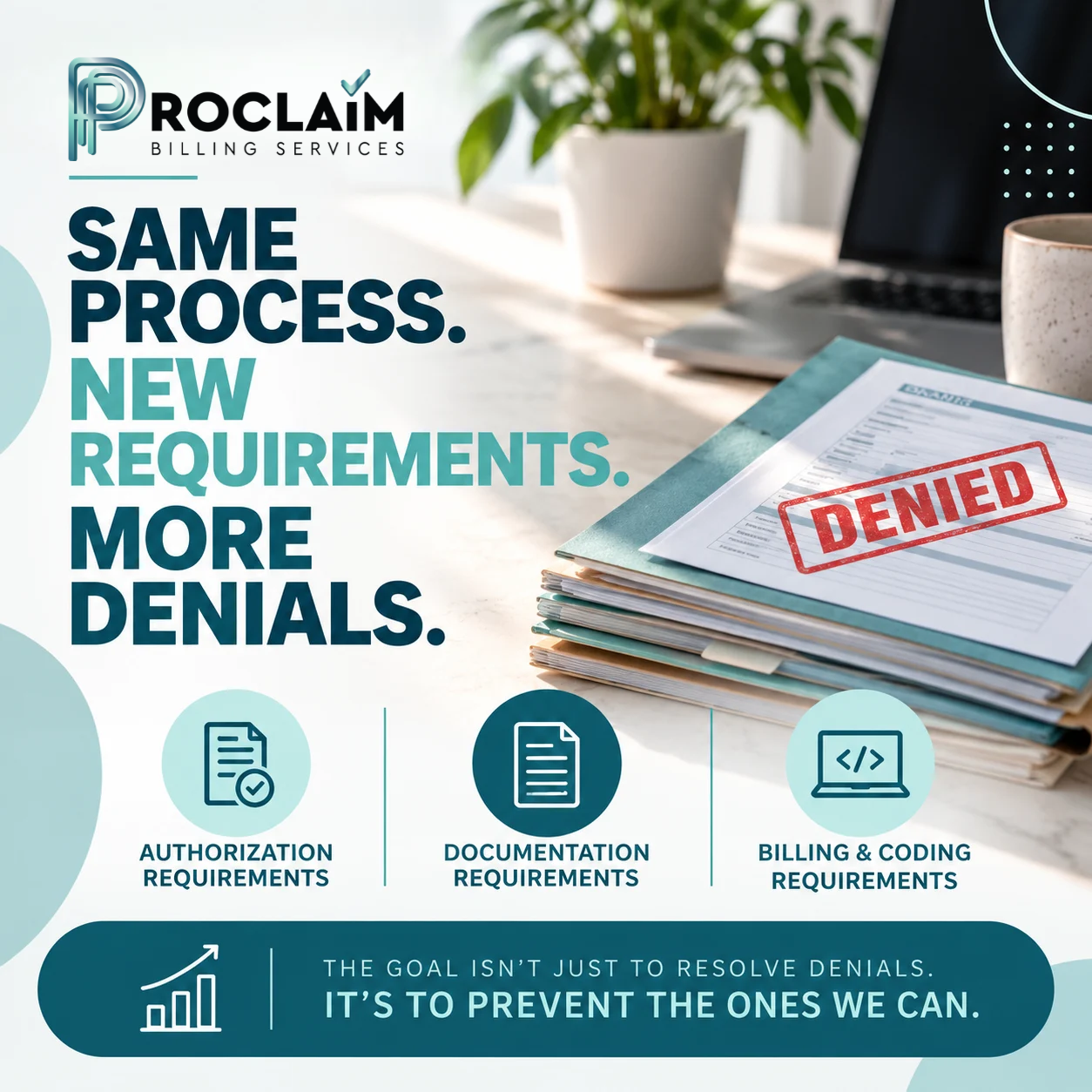
The goal is to prevent the ones we can.
For O&P practices, that means making payer requirement reviews part of the billing process rather than waiting until denials reveal a problem.
It also means ensuring that changes are communicated to the people responsible for authorizations, documentation, coding, and claim submission.
A few practical steps can make a difference:
Review recurring denial reasons. Look for patterns that may indicate a requirement has changed.
Verify current payer guidance. Use applicable payer policies and official updates rather than relying solely on past claim experience.
Keep workflows and checklists current. When requirements change, make sure the process changes with them.
Communicate across departments. Billing teams, clinicians, and administrative staff need to understand the requirements that affect their work.
These steps aren't about creating more work for your team. They're about reducing the time spent correcting issues that could have been caught earlier.
We Understand O&P Billing Because We're in O&P, Too
At Proclaim Billing Services, we bring a different perspective to revenue cycle management.
We don't just provide billing services to O&P practices. We operate an O&P practice, too.
We navigate the same payer requirements, documentation challenges, and reimbursement issues that affect the practices we support.
That firsthand experience shapes how we approach billing.
We understand that successful revenue cycle management involves more than submitting claims and working denials. It also requires recognizing patterns, understanding where processes may be breaking down, and helping practices respond as requirements evolve.
Because every avoidable denial represents time and resources your team could be spending elsewhere.
Is Your Practice Keeping Up With Changing Payer Requirements?
If your practice is seeing an increase in denials, it may be worth looking beyond individual claims.
Are the same issues appearing repeatedly? Have payer requirements changed? Are your internal workflows keeping pace?
Sometimes, improving revenue cycle performance starts with asking whether the process itself needs attention.
At Proclaim, we're here to help O&P practices navigate those challenges, identify opportunities for improvement, and take some of the billing workload off their teams.
Are preventable denials slowing down your revenue?
We'd welcome the opportunity to learn what your team is experiencing and explore where Proclaim may be able to help.
Proclaim Billing Services
O&P billing support from a team that understands your industry.